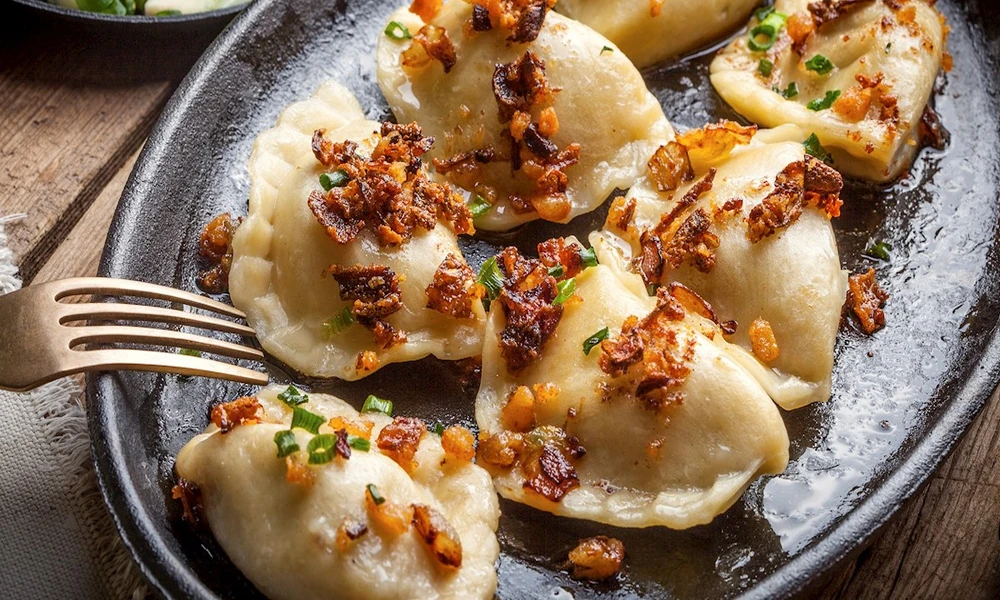
Mushroom pierogies often need a side with a different character more than they need another mushroom preparation. Start with something bright, fresh or simply seasoned, then decide whether a sauce or herb adds anything useful. The goal is to enjoy the filling alongside another food, without making every component compete for the same earthy flavor.
Give the earthy filling some space
Crazy Wild Mushroom contains potato, onion, white mushrooms, portabello mushrooms and porcini mushrooms in a full-size, plant-based pierogi. That is already a distinct savory starting point. You do not need to buy a separate mushroom sauce merely to make the dinner feel connected to the filling. The connection is present inside the dumpling.
Imagine how much of the filling you want to notice. A strongly flavored sauce across the whole plate may become the first thing you taste. That can be enjoyable if it is your intention, but it changes the meal’s emphasis. For a first serving of an unfamiliar variety, a restrained accompaniment gives you a clearer sense of what you bought.
Restraint does not require a bare plate. A vegetable side, a small salad or a familiar condiment can make dinner feel considered while leaving the mushroom filling recognizable. Choose one main contrast instead of adding several finishing ideas at once. You can learn more from a simple combination than from a plate where every bite includes four competing ingredients.
Read the current package directions for the frozen, uncooked dumplings before planning the side’s preparation. If the dumplings need your attention at the stove, assemble a cold accompaniment first and refrigerate it until serving. Choose its bowl in advance as well, so the finished side has somewhere to go while you prepare the main food.
Consider brightness before adding cream
Creamy sauces are a familiar companion to mushrooms, but familiarity is not the same as necessity. Before buying one, think about whether a tart or fresh element would give you the contrast you want. A lightly dressed salad can offer a different taste between bites. Add the dressing gradually and taste the salad before serving it beside the dumplings.
Brightness can come from a component you already use comfortably. A vinegar-based dressing, a lemon finish on a suitable vegetable or a small portion of a tangy condiment are possible directions. Choose one and keep it distinct. Combining several acidic elements without tasting them together can be as distracting as adding too much richness.
If you prefer cream, let it be a choice rather than an automatic second main flavor. Serve a little alongside the food and assess whether it adds to your enjoyment. For a plant-based meal, check the ingredients of the sauce as well as the dumplings. The filling’s classification does not extend to every condiment that might accompany it.
Think about other courses or sides too. If the table already includes a rich soup or creamy vegetable dish, the pierogi accompaniment can move in another direction. A meal does not need each individual item to reproduce the same mood. Contrast across the table may be more satisfying to your taste than an additional layer of a familiar sauce.
Choose vegetables by their role on the plate
Ask what you want the vegetable to contribute. A raw cucumber preparation offers a different eating experience from a softly cooked vegetable. Greens can occupy a separate part of the plate without adding another starchy element. Neither choice is universally better; the role matters because the dumplings already provide their own filling and dough.
Start with the vegetable drawer before making a new shopping list. If you have greens that need using, a salad may be the most natural partner. If you have a vegetable you regularly prepare as a side, keep that familiar method and let the mushroom pierogies be the new element. There is no need to learn two unfamiliar preparations in the same evening.
Leave enough room on the plate for the foods to remain distinct. A side buried under dumplings becomes hard to serve and may lose the texture you chose it for. A separate bowl is useful when the dressing or juices would spread across everything. The physical arrangement can preserve contrast just as much as the ingredient choice.
Consider the work involved. A vegetable that needs the same piece of equipment at the same moment as the dumplings creates a scheduling decision. Choose a side that fits the available kitchen or prepare its components in a sensible sequence. A flavor pairing is only useful when you can bring both parts to the table as intended.
Use herbs as an accent rather than another project
An herb you already enjoy can finish the plate, but a long list of fresh herbs is not required. Use one with a purpose: perhaps a familiar green note in the salad or a small garnish that ties the side together. Buying several bunches for a single dinner can create more ingredients to manage than the meal needs.
If you are choosing the main filling through Holy Perogy in the Bronx, decide on the accompaniment after reading the mushroom description. Potato, onion and the three named mushrooms give you enough information to select a contrasting side. You do not need to invent a restaurant-style recipe around the product to make the purchase worthwhile.
Taste the side before it joins the plate. If its dressing already has a pronounced herb flavor, another garnish may contribute little. If the vegetable is deliberately plain, a small familiar finish may be welcome. Treat herbs as part of the food you are eating, not as decoration required to make a frozen ingredient look acceptable.
Choose the accompaniment that helps you notice both foods. A crisp salad, a bright vegetable or a modest finish can give the mushroom filling room to be itself. One well-chosen contrast is enough to make the plate feel intentional.