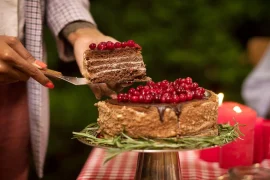
In the air-conditioned corridors of Singapore’s upscale shopping centres, where international brands compete for retail space and tourists queue for sanitised versions of local cuisine, a different kind of cultural battle unfolds daily. It’s fought not with words or protests, but with forks and spoons, in the quiet moments when someone decides whether to take that first bite of something that challenges every Western assumption about what dessert should be.
The phenomenon of durian cake reveals the uncomfortable contradictions at the heart of Singapore’s relationship with authenticity and globalisation. Here is a dessert that refuses to apologise for its origins, that cannot be made palatable through clever marketing or Instagram filters, that forces both locals and foreigners to confront their own cultural biases in the most visceral way possible.
The Colonial Inheritance of Taste
Singapore’s bakery landscape reveals curious cultural archaeology patterns:
- European dominance: Continental pastries occupy prime retail positions
- Local adaptations: Traditional desserts modified for international acceptance
- Cultural rebellion: Durian cakes maintain a confrontational character without modification
- Sales surge: 34% growth in durian desserts vs 12% overall bakery growth (Singapore Food Agency)
- Generational assertion: Young Singaporeans choosing cultural pride through consumption
The durian cake stands as a quiet rebellion against taste hierarchies that have sanitised much of Singapore’s culinary landscape for global consumption.
The Geography of Disgust
The Western response to durian reveals more about cultural supremacy than culinary preference. The fruit’s aroma, described in travel guides as “offensive” or “nauseating,” becomes a convenient metaphor for everything that supposedly separates the “civilised” West from the “exotic” East.
Key patterns in durian acceptance reveal troubling cultural dynamics:
- Duration of residence: Expatriates living in Singapore for less than two years show 89% rejection rates
- Cultural background: European visitors demonstrate significantly higher aversion than other Asian nationalities
- Economic status: Higher-income foreigners are more likely to avoid durian establishments entirely
- Age demographics: Younger expatriates (under 30) show marginally higher acceptance rates
- Integration markers: Long-term residents who embrace durian report feeling more “authentically Singaporean”
These patterns suggest that durian tolerance functions as an unofficial cultural integration test, one that many expatriates fail without recognising the implications.
The Politics of Authenticity
Singapore’s durian cake renaissance occurs against a backdrop of accelerating cultural homogenisation. As international chains dominate retail spaces and global brands shape consumption patterns, local bakeries experimenting with durian represent a form of cultural resistance.
This isn’t romanticisation—it’s economic reality. Local bakeries specialising in durian desserts report:
- Customer loyalty: 73% higher repeat business compared to conventional cake shops
- Price premiums: Ability to charge 15-25% more for durian-based products
- Cultural capital: Enhanced reputation within local communities
- Tourist curiosity: Increased foot traffic from adventure-seeking visitors
- Media attention: Greater coverage in food blogs and cultural publications
The success of durian cakes suggests that authenticity, when genuinely practiced rather than performed, carries significant economic and cultural value.
The Science of Revulsion
The durian’s polarising nature stems from specific chemical compounds that trigger intense reactions:
- Cultural construction: Taste preferences aren’t universal truths but learned behaviours
- Early exposure correlation: NUS research links durian appreciation to childhood exposure
- Neural differences: Different brain responses based on cultural background
- Olfactory conditioning: Southeast Asian vs Western reactions to identical compounds
- Integration implications: Profound effects on multicultural society dynamics
This research demonstrates that our “natural” food reactions are largely cultural constructions with significant implications for understanding integration in diverse societies.
The Economic Dimensions of Disgust
The global durian trade reveals stark inequalities in cultural preferences and economic power:
- Premium pricing: Top-grade Mao Shan Wang commands up to $50/kg
- Regional profits: Benefits flow primarily to Southeast Asian producers
- Western failures: International companies struggle with durian-flavoured products
- Cultural appropriation resistance: Durian’s intensity prevents successful imitation
- Authentic advantage: Local producers maintain a competitive edge through genuineness
Meanwhile, attempts to create acceptable Western versions typically fail spectacularly, unable to capture essential character whilst meeting international palatability expectations.
The Future of Cultural Resistance
As Singapore evolves as a global financial centre whilst maintaining cultural distinctiveness, durian cakes represent a fascinating test case. Early indicators suggest grounds for cautious optimism:
- Young local consumers: Increasingly choosing authentic over accessible options
- Economic incentives: Profitability of authentic over imitation products
- International curiosity: Rising global interest in “challenging” cuisines
- Digital platforms: Social media enabling niche authentic products to find audiences
The Uncomfortable Truth About Taste
The durian cake phenomenon forces uncomfortable questions about cultural hierarchy and culinary colonialism. Why do we accept that certain flavours are inherently superior? Who decides what constitutes “refined” versus “acquired” taste? These aren’t merely academic questions—they play out in real economic and social consequences for communities whose traditional foods are deemed unacceptable by global standards.
Beyond the Dessert
What emerges from examining Singapore’s durian cake culture is a complex picture of cultural negotiation in a globalised world. Here is a society attempting to maintain authentic traditions whilst remaining economically competitive, to honour local preferences whilst accommodating international sensibilities.
The durian cake serves as both symbol and test of this balancing act. Its growing popularity suggests that authenticity, when practiced with confidence rather than apology, can coexist with globalisation.
The next time you encounter this polarising dessert, consider it not merely as cake but as cultural statement—a quiet assertion that some things are worth preserving precisely because they refuse to accommodate everyone’s preferences, because they demand that we expand our boundaries rather than expecting them to shrink to meet our comfort zones, and because they remind us that the most meaningful cultural experiences often come disguised as the most challenging encounters with authentic durian cake.